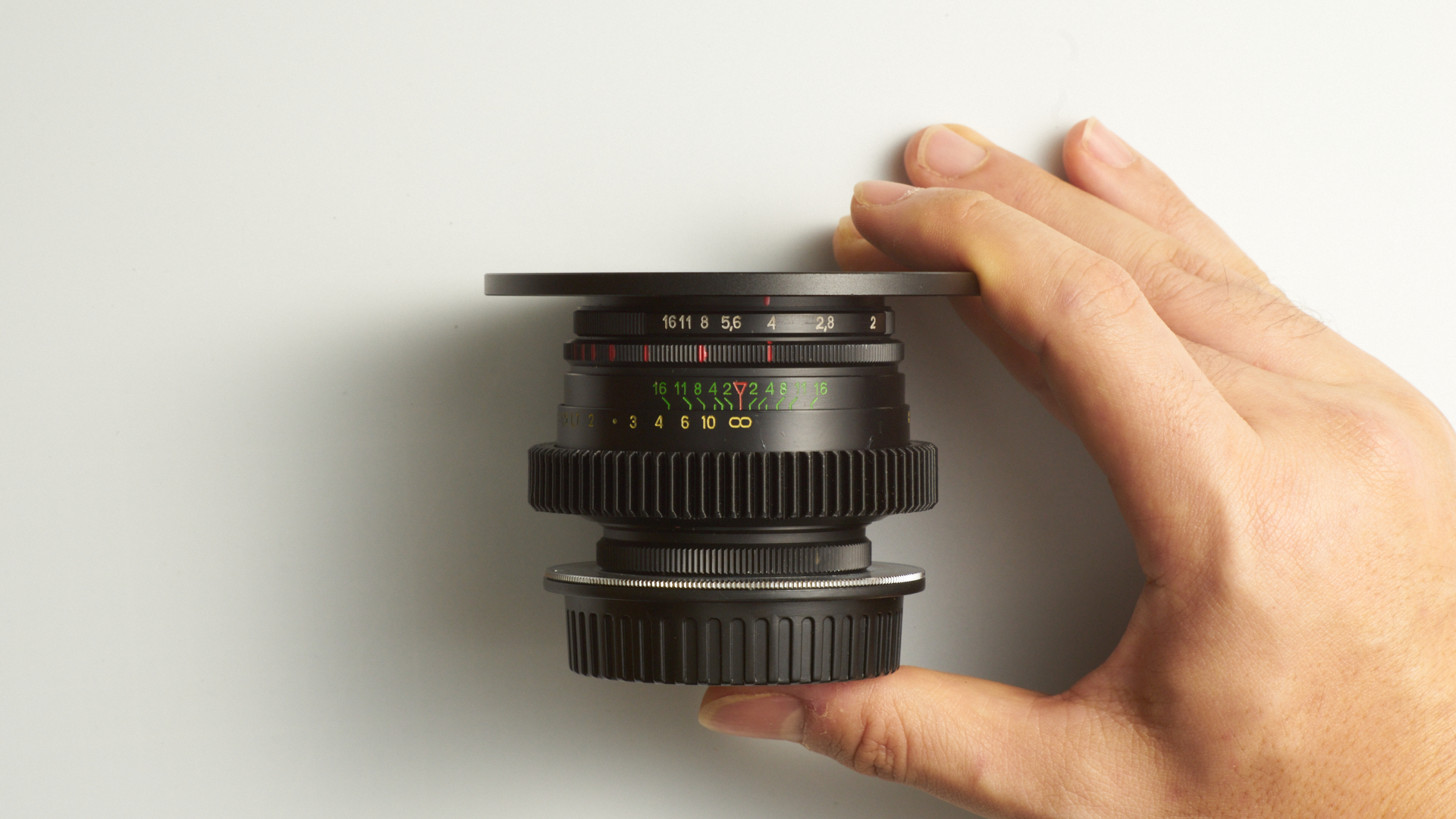
I’ve watched countless Helios 44-2 lens reviews, and most of them get the same thing wrong. After testing and shooting with these lenses for almost five years now, I realised the problem isn’t the logo on the name plate, the year of manufacturing, or “Soviet quality control” so many reviews are happy to claim. It’s what almost every review ignores – the one factor that changes everything. And until you understand it, you could be misjudging lenses that might actually be perfect for your next shoot.
Filmmakers need tools they can rely on. And after watching countless Helios 44-2 lens reviews over the years, I kept noticing the same thing.
Most of those reviews only include a few shots of leaves, flowers, or a fence at minimum focus. And sometimes the lens they’re testing is clearly hazy, decentered, full of fungus, or has stiff, dried grease. But the conclusion always ends up being about “poor Soviet quality control”. After a while, that becomes the story, and many filmmakers assume these lenses aren’t dependable for real-world productions.
After working on more and more copies and shooting them in real conditions, a pattern slowly started to emerge. The inconsistency people talk about didn’t seem to come from the lens design itself, but the lens condition they were tested in. That realisation quietly changed how I now view almost every Helios 44-2 lens review I come across.
When I bought my first Helios lens, I didn’t think much about its age. Most of these lenses were build between the 1960s and 1990s, which means a lot of them are pushing sixty today. Over time, I realised something simple but important: buying a random vintage lens is kind of like buying a classic car without getting inspected by a qualified technician. Sometimes you get lucky. Most of the time, you don’t.
That realisation is what pushed me to start servicing and cine-modding these lenses myself. If you ever want to work with a reliable Helios 44-2, you can order them through my website.
But fixing the buying side of the problem was only part of it.
Once I started paying closer attention to how these lenses were reviewed, a pattern became hard to ignore. A vintage lens that hadn’t been cleaned or serviced in decades would be tested, and whatever flaws showed up in the footage became the character of the Helios 44-2. Not because the design intended it or due to Soviet quality control issues, but because that specific copy was in rough shape. And it made me realise how easy it is for filmmakers to form the wrong impression when the sample itself is compromised.
Once that pattern started to make sense, I found myself simplifying the process rather than adding more opinions. The only way I could trust what I was seeing was to remove as many variables as possible. That meant cleaning, servicing, and checking each lens on an ISO 12233 chart before shooting anything, so the footage reflected the lens itself — not haze, fungus, or years of neglect.
When I spoke to other DPs and filmmakers, the frustration was always familiar. Everyone loved the character of vintage Soviet lenses like the Helios 44-2, but buying from a random seller often felt like a gamble.
I didn’t want filmmakers to have that experience. I wanted these lenses to be something you could actually rely on a shoot and not a lucky draw. That’s why I service and cine-mod vintage Soviet lenses, and offer them to filmmakers who value reliability as much as character. If that’s useful to you, you can find more details on my website.
But even with a reliable lens in hand, there’s still another problem most filmmakers run into.
Most Helios 44-2 reviews focus on plants, fences, or quick shots at minimum focus. Some even spend more time talking about logos, serial numbers, or production years than how the lens actually handles on a camera. None of that tells you how the lens handles skin tones, backlit subjects, movement, or the compositions we rely on when shooting real scenes. So filmmakers end up with uncertainty, second-guessing their choices, and sometimes falling for myths that don’t matter once you start rolling.
Once the lenses were properly serviced and the variables were taken out of the equation, I started noticing details that never showed up in typical tests. Shooting in real environments revealed how these lenses actually render skin tones, how contrast and flare react to backlight, and how the character shifts as you move between different shot sizes. It became clear to me that this kind of footage tells you far more than any close-up test ever could. Not what the lens looks like at minimum focus, but how it behaves in the same framing filmmakers compose on real shoots.
And maybe it helps to explain where this approach comes from. I spent more than a decade shooting fashion and commercial work where consistency isn’t optional. When something goes wrong on set, it can be an expensive mistake. Over time, that taught me what a lens actually needs to deliver when people are relying on it.
Once I started to understand how much condition and testing shaped people’s perception of these beautiful lenses, it became harder to stay detached from it. I wasn’t just seeing bad reviews anymore — I was seeing how those misleading conclusions affected the way filmmakers perceive vintage Soviet lenses. At that point, it stopped being a technical issue and started feeling like a responsibility. Knowing what these lenses could actually deliver in proper condition, I had to decide whether I was comfortable watching the same Soviet quality control myths repeat, or whether I wanted to take a more active role in how these lenses were experienced by other filmmakers.
At a certain point, it stopped feeling right to just point out the problem and move on. After seeing how much difference proper servicing and real testing made, I felt a responsibility to treat these lenses the way I’d expect any tool to be treated on a real job. That’s what led me to start servicing and cine-modding these lenses myself. And when I test them, I do it the same way I approach real work. What you see here isn’t theory or best-case samples. It’s the standard I’m comfortable standing behind on an actual production, and the standard I want other filmmakers to be able to rely on.
After a while, I started noticing how much time Helios 44-2 reviews spend debating logos, serial numbers, and production years — and how little time they spend showing what actually matters. It made me wonder whether those differences really matter once the lenses are properly serviced. Or if we’ve all been focusing on details that don’t actually change the image in any meaningful way.
So I decided to stop guessing and test it for myself. I took 10 random Helios-44-2 lenses, serviced them completely, and tested them side by side to see what actually changes — and what stays surprisingly consistent. If you’ve ever been confused by conflicting Helios 44-2 opinions, this might answer a few questions you didn’t even know to ask.
Leave a Reply