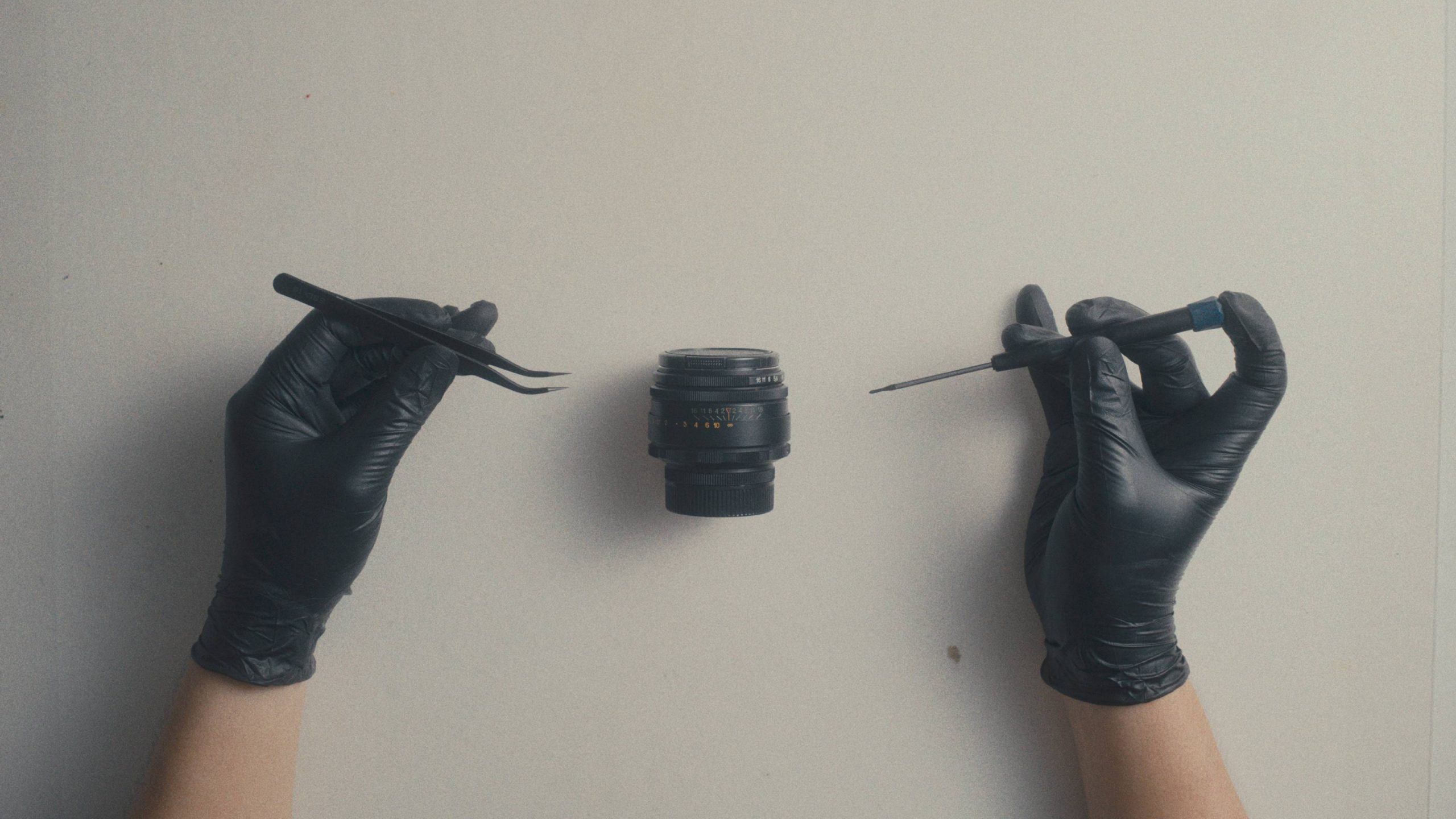
The internet has been saying Valdai Helios 44-2 has poor quality control for years. Reddit threads, YouTube comments, vintage lens groups — same complaint, repeated like fact.
I handpicked three Valdai Helios 44-2 lenses off eBay — Amber (1981), Britney (1982), and Celine (1990) — and ran 8 tests on them. The kind of tests that actually matter to a working filmmaker on a paid job.
Before service, the differences were exactly what the internet predicted.
After service, all three were identical.
This isn’t another “I tested the Helios 44-2” video. This is what happens when a lens technician actually looks inside.
transcript
If you’ve researched the Helios 44-2 lens, you’ve seen this. Sample variation. Lucky copy. Noticeable difference. For years, youtube videos, reddit threads, and vintage lens groups have repeated the same thing. But this video isn’t one of them.
For a sensible and sophisticated filmmaker, you already suspect this doesn’t make sense. These lenses came off the same factory, the same assembly line, often the same batch. So how does one copy come out good, and another comes out rubbish? Yet nobody’s actually proven it either way.
And if you’re about to spend your own money on one of these beautiful Soviet lenses for your next project, that’s not just a nagging voice in your head. What if the collective wisdom was true?
By the end of this video, you’ll know whether copy variation is a factory problem you can’t avoid, or a servicing problem I can solve.
I bought three Helios 44-2 from the Valdai factory. They are Amber, Britney, and Celine. Instead of buying the cheapest lens I could find, I handpicked these off ebay, as if I were cinemodding them for other filmmakers. I paid about a hundred US dollars each.
I will run 8 tests on these lenses, from how well the focus ring works with a follow focus motor, to whether the aperture ring works reliably, to what the image looks like when shot backlit. Tests that actually matter to a working filmmaker who mounts these lenses on a paid job.
Before we go into the first test, I’d like to introduce them to you. This is amber, she’s made in 1981. this is Britney, made in 1982. Celine is the newest unit, made in 1990, just 1 year before the dissolution of Soviet Union. Let’s see how they do in my first test.
First thing any filmmaker does when they pick up a lens is to turn the focus ring. You’d think these three lenses, from the same factory, would feel roughly the same. But they didn’t. It’s not even close. If the first test is already this inconsistent, what does that say about everything else on this lens?
I call it the pinky test. If i can move the focus ring with my pinky finger, it pass the test. If i can’t then it’s too stiff.
i can turn amber from end to end with the right resistance. no drama here. but things look different with britney. she’s generally smooth but gets stiffer near minimum focus distance. celine is a different story. i struggle to turn her, she fails the test.
the pinky test shows how easily i can turn the focus ring. it works for solo filmmakers pulling focus by themselves. but there is another spectrum of filmmaking with a wireless follow focus system and a first ac. the setup usually start with a follow focus motor calibration before anything else. if the motor couldn’t get the correct hard stop on both ends, then the lens is a dud. so i mounted a follow focus motor on all three, and ran the same calibration.
amber had no trouble getting calibrated. but britney couldn’t get consistent calibration. celine was the worst. the follow focus motor slipped completely and couldn’t calibrate at all. and you’d think a ‘cinemod’ is just $1 worth of 3D printer filament.
two out of three copies, both failed at my pink test and unusable with a follow focus motor. if this were the end of the story, the collective wisdom would be true. But this is the part where you feel like this video was worth your internet bill.
Amber and britney had both been serviced before. Amber had won the lottery but britney was not so lucky. Both of them had a shortcut service. Someone slapped a layer of new grease on top of old Soviet grease. Celine was a virgin, she’s still running the original Soviet grease from 1990, except after 36 long years, it has gotten old and dry.
And this is what I learnt after I’ve bought my second helios lens in 2020. Old grease needs to be stripped clean before applying new helicoid grease. So the question becomes, how would it perform after a proper service?
The same pinky finger test and the same follow focus motor calibration. except all three of them now pass with flying colors, ready to take on the next shoot.
So the copy variation was real. It just wasn’t a quality control problem.
there’s a popular test going around for the Helios 44-2. Twist the lens mount and show on camera how much it moves. If there’s less play, it must be good quality. If there’s more play, then it must be a quality control issue. That’s suppose to be an indicative test. But no one ever asks the question that actually matters to a filmmaker – how does that play affect the image?
If the lens mount play is really a quality control issue, then it should do something specific. When I rack focus, the image should shift. It would show up in a shot and potentially ruin a good take. So that’s what I tested.
Amber and Britney didn’t show any effect on the image. But Celine showed noticable image shift when racking focus back and forth.
Before I go further, let’s not forget that this is a stills photography lens, designed to use on a stills SLR camera. Even a Leica Summicron, the Rolls Royce of vintage lens, supposedly the best built lens ever made, costing 10 times as much….
So now we’ve got one lens out of three actually showing the problem youtube lens reviews keep talking about. When I take a closer look at Amber and Britney, I noticed her helicoid screw were loose. I can see a significant amount of “play”, the kind that Internet tells you is a sign of bad quality. Is that solid proof of copy variation? Even with the loose screws, it didn’t affect the image at all. That alone tells me the twist test isn’t measuring what people think it’s measuring.
I wanted one more measurement before blaming Valdai for any of this. I measured the actual groove on the helicoid screw – the part that’s supposed to vary if quality control was really inconsistent. I measured each three times and averaged the result.
A difference of 1.6%
If Valdai’s quality control was really the problem, this is exactly where it should show up. Except it didn’t.
So what was actually wrong with Celine?
I cleaned andk serviced the focusing helicoid on all three. I’ve also tightened the screw on Amber and Britney. i ran the same image shift test again.
Turns out, Celine just had old, dried grease. After I replace it with a fresh grease, it works properly without any image shift.
So the copy variation was real. It just wasn’t a quality control problem.
I’ve read a lot of comments about the Helios 44-2’s aperture ring being too stiff. One guy returned his lens over it. The eBay listing calling it “high quality”, and he didn’t think a high quality lens should be that hard to turn. That’s a fair complaint, and it also reflects the reality of an eBay gamble.
On a cinemodded Helios 44-2, it’s worse. The step up ring takes up space right where my fingers used to grip the aperture ring. My asian sized fingers barely have any convincing grip.
Here’s how I’m going to test it. I’m going to mount the lens on my camera, and I’m going to try to turn the aperture ring by itself.
Amber, Britney, Celine, all three lenses are stiff enough that I could pick up the whole camera sideways, just by gripping the aperture ring. That’s a lot of resistance.
If it’s not sample variation or build quality issues, what could be causing this?
Fifty years old Soviet grease, original from the factory. Even on Amber and Britney that were clearly been serviced before.
So I stripped the old grease, put in fresh grease, and soften the aperture ring tension.
I run the same test again. Except this time, it’s actually usable without breaking the lens. The aperture ring feels effortless, with just enough tension to feel the click, but enough resistance to prevent any accidental adjustment.
So the stiffness was real. It just wasn’t a quality control problem.
Oily aperture blades is one of the most common complains about the Helios 44-2. And Valdai quality control is always the first thing that gets thrown left right and centre. The Internet has been telling you that later production has the worst quality control because Valdai was racing to keep up with mass production. But nobody ever explains how the blades get oily in the first place.
Here’s what I found when I examine all three lenses. Amber, Britney, and Celine all have oily aperture blades. Celine is the newest lens here, dubbed “type 8” and deemed the worst build quality ever produced in the entire history of Soviet Union, but it has the least amount of oil.
From the previous test we know that both Amber and Britney was serviced before. Yet they have oily aperture blades. So what’s actually causing this?
The aperture ring grease as we’ve seen in previous test, it still carries the original Soviet grease. Over 40 years of Soviet grease left to degrade, turns into oil, and migrate straight into the aperture mechanism, into the lens block, and eventually staining the lens elements, and causing haze over time.
I’ve serviced Helios 44-2 and other Soviet lenses for over 6 years now, and I’ve never seen anyone replace the aperture ring grease. Not even units that have been serviced before like Amber and Britney.
So I did what nobody else bother to do. I cleaned the aperture blades, cleaned the entire lens block, and apply new grease.
All three lenses are now completely clean with fresh new grease, which is not unreasonable to expect from a lens serviced by a technician.
So the oily aperture blades was real. It just wasn’t a quality control problem.
Any loose parts on a Helios 44-2, you’d definitely see a comment that blames Valdai’s quality control. So if that’s true, this should never happen to a lens that isn’t Valdai. Let’s find out.
I have three different lenses with me. One still mounted on the original Zenit E, one that was sent to me for service, and the last one looked like it survived Chernobyl. All of them carry the same logo, the one the internet treats as the gold standard.
But what those lens reviews or comments don’t tell you is this.” [footage of junker test — nut thrown off bolt by vibration]
Then I found this line on a Zenit E service procedure manual. On page 19, there’s one line that reads: ‘Note all screws should be glued where possible to prevent loosening due to vibration etc.’ That’s the factory’s own documented procedure.
So what does that mean for Amber, Britney, and Celine?
Celine, ‘manufactured to fulfill mass production,’ still has every screw glued, exactly as per manual.
But things looked different for Amber and Britney. I didn’t spot any glue on the screws. But we know from the previous test that they were serviced by another lens technician — the kind that skipped the one step the factory manual tells you to do.
To be honest, I was that kind of lens technician a few years back. But since then, I apply industry standard threadlocker on every screw on every lens that I service.
And remember those three KMZ units from earlier? Turns out a gold standard logo can’t protect them from unqualified service.
So the loose parts were real. They just weren’t a quality control problem.
Every thing we have seen so far, the focus ring, the lens mount, the aperture ring, that’s all things you can feel when you use the lens, and things i can fix with a proper service. But if Valdai’s quality control was really inconsistent, it wouldn’t be just how the lens feels. It would be what the lens is actually made of.
Here’s my logic. If the aluminium quality was inconsistent, or the dimensions were off between copies, that should show up as difference in weight. If the glass material or cutting was inconsistent, that should show up as difference in weight too.
And if Valdai really cut corners on materials, it wouldn’t take too much to prove it. A few grams from lens to lens is all it takes to confirm it.
I don’t need special tools for this test. I don’t even need any lens servicing knowledge for this. I used a weighing scale from the kitchen. But if the results come back inconsistent, everything I’ve shown you before this, none of it matters. This one test can collapse my entire thesis.
To rule out any errors on my end, I measured each lens three times and averaged the results.
Here are the results. Amber and Britney weight the same. Celine weighs 1 gram more. That’s a difference of less than half a percent, across two different decades of Valdai production.
If the materials were really inconsistent, and that Valdai Helios 44-2 was lacking quality control, this is exactly where it would show up. But it didn’t.
So the copy variation theory had one more result to explain, and it couldn’t.
Everything before this — the focus ring, the screws, the aperture — that’s the baseline. A working filmmaker expects a lens to work, even if it’s 40 years old. But they didn’t choose this lens because it works. They chose it because it looks different from every clinical modern lens on the market. So the real question now is — does every copy actually render the same image, or does copy variation mean one copy looks different from another?
But here’s what makes this test different from every other one you’ve seen. Running an image quality test on a 30 to 40 year old lens, without checking what’s actually inside, is irresponsible. Most reviews assume these lenses were assembled yesterday and perform like new. Even Top Gear acknowledges that old vintage cars lose horsepower compared to their original spec sheet. A lens that has never been documented or maintained is no different.
So I ran two tests to show you what I mean. An outdoor half body shot with a color chart in frame to keep exposure consistent. And an indoor controlled test chart with consistent lighting.
Both tests showed similar results across Amber and Britney. But Celine had noticeable lifted shadows, in both the outdoor and the controlled test.
And this is exactly the point where every other lens review tells you to avoid Celine, because the logo or production year printed on the lens is affecting the contrast. Another check mark in copy variation.
So I did what those reviews never do.
Amber had an oily surface smeared across the elements — like wiping oily fingerprints with a cloth. Britney had oil around the lens elements, contaminated from the degraded aperture ring grease we found earlier. Celine looked perfect to the untrained eye. It looks clean and seemingly untouched. But on closer inspection, she had a thin layer of haze covering her elements. Here’s why that matters. Haze scatters light inside the lens, which raises the black point. The shadows look grey instead of black. It’s not the organic character or vintage look cinematographers talk about. It’s just a dirty lens.
This is how it should look like after a properly clean.
Amber, Britney and Celine had a luma value spread of under 1% on a test chart. And on the outdoor test, all three lenses looked identical. If this was every other lens review, Celine would have looked like a bad copy. A result of poor Soviet quality control. A low quality logo. The wrong production year. But that’s not what she was.
So the image quality difference was real. It just wasn’t a quality control problem.
Backlight is where lenses go to die. It’s the hardest test of a lens coating. Point it directly at a light source, and whatever weakness is in the glass will show up immediately. If the copy variation is real, this is the test that’ll confirm it once and for all.
I shot directly towards a ring light on all three lenses, creating a veiling glare in the image. This tests the coating’s ability to manage contrast under the hardest possible lighting condition.
Amber and Britney both showed lifted blacks under backlight. It’s exactly what I’d expect from a single coated lens. That’s not a flaw, that’s the lens rendering how it was designed for in 1981.
But Celine showed significantly lighter blacks. Not the kind of difference you’d expect between two copies of the same lens. The kind of difference that makes a filmmaker look at the footage and think — this copy is worse.
So is it the copy variation the Internet has been talking about all along? That Celine had worse coating than the other two?
On the surface, it’s easy to point out ‘copy variation’ and conclude the test. But on closer inspection, it’s the same haze we found on previous section.
I ran the test again after cleaning the lens elements, made sure the surface is clean and free of any haze or oil residue. This time, Celine matched closely with Amber and Britney. The kind of lifted blacks you’d expect from any single coated lens shot directly into a light source.
So the coating difference was real. It just wasn’t a quality control problem. We have seen 8 different tests but we come to the same conclusion, every time.
I handpicked Amber, Britney, and Celine as best as I could with only pictures from eBay. When I ran the initial tests on them, the mechanical and image quality differences were exactly what the internet predicted.
This video could have been ‘The Internet says Valdai is the worst quality control so I tested them’ to ‘There are differences between lenses’ to ‘The Internet is right.’
But back in 2020 when I got my second Helios lens, the focus ring was so stiff that I couldn’t use it properly. But instead of blaming the logo or production year, I looked for ways to fix the problem. That’s why I service and cinemod vintage Soviet lenses for other filmmakers. Not because I get to lie down on a beach and enjoy a cold one, but because I’ve seen first hand how a poorly maintained Helios 44-2 affects the shooting experience.
That lens the internet told you to avoid because of its logo or production year — it’s not a bad copy. It’s a 40 year old mechanical lens with no maintenance record, tested by someone who doesn’t understand lens mechanics, regurgitated over decades without checking facts.
Copy variation is real. But it was never a quality control problem. It was always lack of proper service.
So if you’ve been researching the Helios 44-2 for your next project, I wouldn’t tell you to look for a logo or serial number. Instead, I’d tell you to look for a properly serviced copy, by someone who knows what they are doing.
That’s exactly what I do.
Leave a Reply