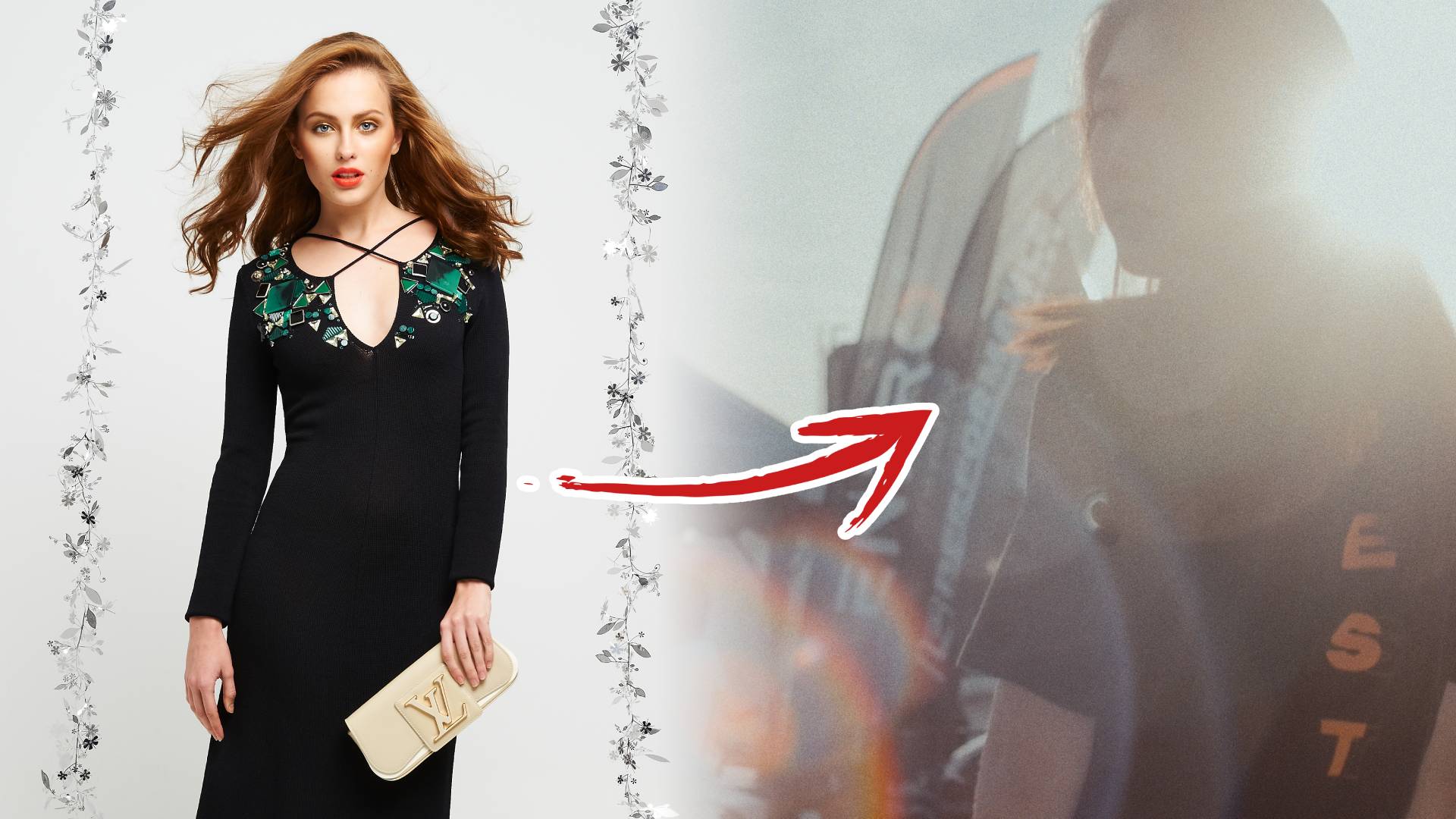
For 13 years, sharp was the only thing that mattered to me. It’s what agencies paid for. It’s what built my career. And it took a box of old film, a stiff vintage lens, and a decision to walk away from client approval to realise sharp was never the point.
If you’re a filmmaker chasing something you can’t quite name, a feeling in your footage that specs and grading presets can’t seem to deliver, I’d like to invite you to experience this yourself.
transcript
13 years. That’s how long I’ve shot fashion and commercial work. And for 13 years, sharp was the only thing that mattered. My vocabulary didn’t had soft, warm or organic. The agency and client people wanted sharp, contrasty, and vibrant. That’s what I delivered and I got a nice paycheque in return. I was good at it and I never had a reason to think otherwise. Why would I?
The camera industry was racing the same direction I was. New lenses promised sharper image and less aberration. Digital SLR cameras getting more megapixels. Clients demanded instant previews on my laptop, otherwise I wouldn’t be called for the next job. Everyone was chasing the same thing.
Then a photographer I had assisted for two years handed me a box. I didn’t find any exciting gear or a brand new lens. It was a box of old film. It had some black and white rolls in 120 medium format, along with a couple of 35mm rolls. Some of it had expired the same year Canon announced the 5D – the camera that made all of this obsolete in the first place.
I wasn’t impressed. This analogue stuff didn’t fit into my digital workflow. It didn’t fit into the career I was building. As far as I could tell, it didn’t have any value at all.
I only shot it because he’d asked me to. That, and I was curious about a technology that I had not shot before. So I picked up a Mamiya RB 67 and started shooting rolls of it. I wasn’t shooting for a client or a paycheque. It was purely exploring and experimenting on personal projects that no client would pay for.
And somewhere in there, I connected with the images more than I expected to. They felt warm and inviting. There was a feeling of closeness to them that I had not felt with any of my client work. There was no approval or paycheque at the end of it, but I was fulfilled and proud of the images, even today.
Around that time, I kept coming back to a series of photos by Russell James, the Victoria’s Secret photographer. Technically, they were not sharp. They were not pixel perfect and certainly my clients wouldn’t approve of it. But they felt the same way my film shots did. It has the same soft look and the same feeling of closeness.
But knowing that didn’t pay the bills. Agencies still wanted sharp. Clients still wanted vibrant. And my professional life still had to go on. The film roll just didn’t fit into it.
So I left it behind and went back to shooting sharp, for the paycheque. I didn’t know if I’d ever get to make images that felt like that again.
That was 2011. For the next seven years, I kept shooting sharp. I didn’t do it just for my clients, even my personal work went back to it.
Somewhere in there, I picked up a Carl Zeiss classic lens. It was a fully mechanical lens with manual focus only. I remember thinking, this is it, this should scratch the itch the Mamiya left behind. But the photos still came back sharp. It looked clean and not different from my Canon lens, just slower to shoot with. It became the least used lens in my kit. Whatever I was chasing, the Carl Zeiss classic couldn’t give me the same feeling. I stopped expecting classic to mean anything by itself.
Then in 2018, 10 years after the Canon 5D Mark II changed the whole video industry, I made my first video. After years of reading about how to shoot one, I finally escaped the tutorial hell. I wanted it to feel like a movie.
I tried teal and orange grading. It was close, but not it. I tried lifted blacks and lowered whites. It was closer, but still not it. I added a black pro mist filter on top of all of it, and it looked worse. It didn’t feel like a movie at all. I had done everything the internet told me to do, but my video looked like a computer screensaver. That’s what sent me down the rabbit hole. I started researching how cinematographers actually got that look. That’s how I found it: a vintage Soviet lens, from the same era as the Mamiya.
At first I was skeptical. If the “better quality” Carl Zeiss classic didn’t deliver, what chance did this old relic have?
But the moment I shot with it, that feeling came rushing back. The image look soft the way I remembered. The skin had details, but in a gentle way. And somehow that gentle softness is what made the image feel organic. It wasn’t the teal and orange grade or the expensive Tiffen filter stacked on top of sharp footage. It was the same feeling the Mamiya gave me, seven years later, in a lens that I least expected.
After Covid-19 happened, I made a decision. I was done chasing client approval, assigning my self-worth to the numbers on a paycheque. That had been the whole game for 13 years: being an interchangeable cog rather than creating work that I could truly call my own.
What I wanted instead was what I’d felt with the Mamiya, what I’d felt looking at Russell James’ photos over and over. And now, I finally had the room to shoot that way.
I could afford to shoot slowly, but get very intentional and deliberate with each composition. I could shoot my models without needing retouching afterwards. And it was exactly in the soft, unsharp image, that I got the same feeling of closeness and intimacy I didn’t get with more modern lenses. I started shooting backlit more too, not only for the depth and dimension on the subject, but I was constantly rewarded with flares that added just the right amount of cinematic sauce on top of it.
And the vintage Soviet lenses fit all of it. It’s as if they were built for it.
Once I started shooting that way, going back felt unthinkable. A modern lens could still secure the paycheque. It just couldn’t give me the feeling of owning my work.
I’ve always thought shooting sharp image was the point. That’s what I got paid for. That’s what 13 years told me it was right thing to do.
But the images I actually kept, the ones I still look at today, none of them earned that because it was pixel perfect. They earned it because it gave me a feeling.
I didn’t realise technical perfection was never the point. It just took a box of old film, a lens I was skeptical about, and a decision to stop chasing approval, to see what I’d been missing the whole time.
If that’s the kind of image you are chasing, warm, intimate and real, I’d like to invite you to experience this yourself. You’ll find what I make here.
Leave a Reply