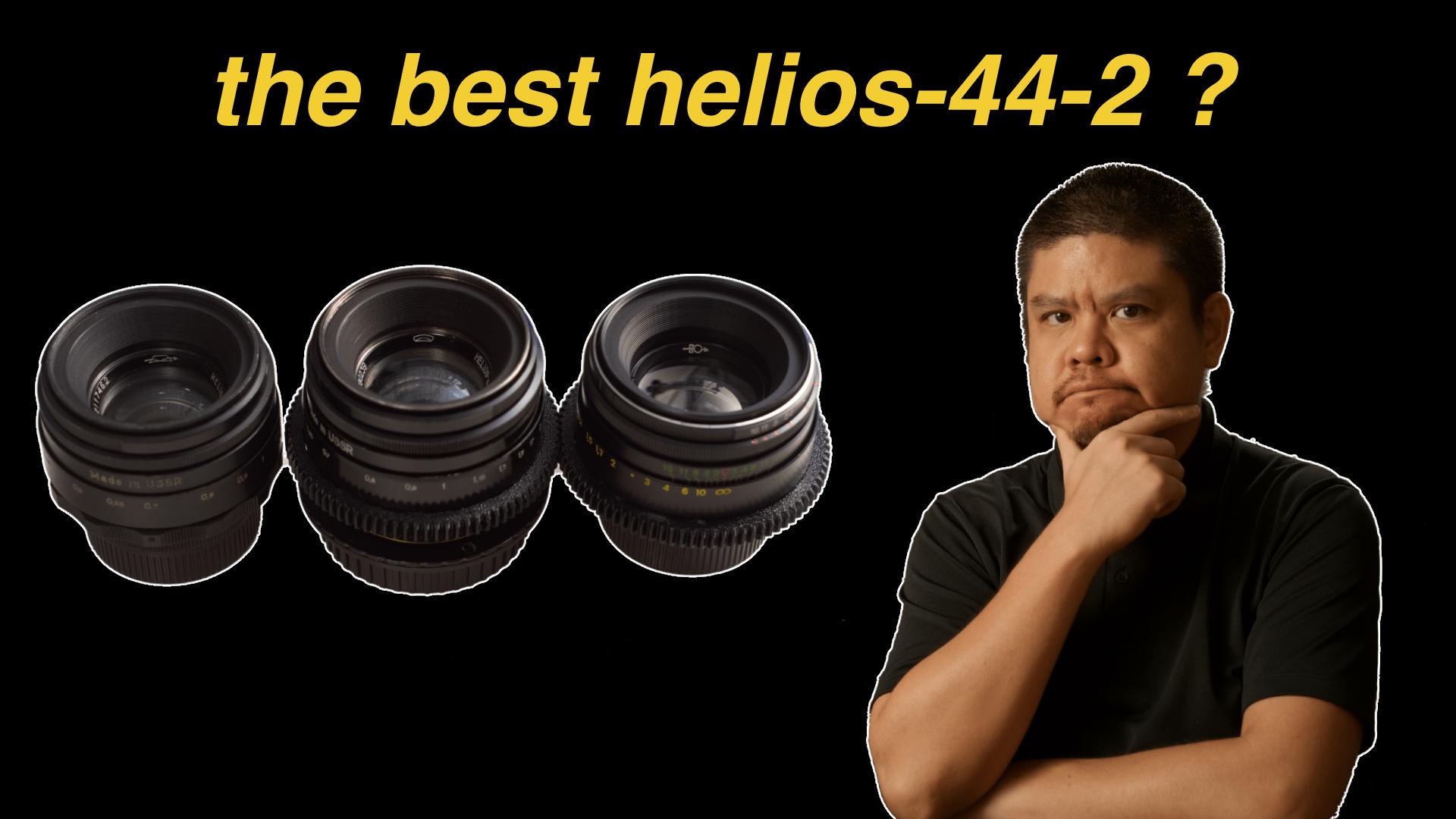
Introduction
Have you ever looked at a scene in a movie and thought, Wow, that feels alive
—like it’s breathing texture and emotion? That’s the magic of vintage lenses.
When I first picked one up, I didn’t know what I was looking for. I just knew I
wanted something real, something that felt like the movies I grew up loving.
And then I found the Helios 44-2. This little lens changed everything for me. It
gave me that organic film look I’d always admired. But here’s the thing:
Helios-44-2 is the most produced vintage lens in the world. There are multiple
versions, and if you’re like me, you’re probably wondering, Which one should I
get?
After years of testing, I’ve found the one I keep coming back to: the Valdai.
Today, I’m sharing everything I’ve learned—so you can avoid the pitfalls, find
the right lens, and unlock its full potential. Let’s dive in.
The best starting point
If you’re just starting out with vintage Soviet lenses, the Valdai version of the
Helios 44-2 is hands-down the best choice. Here’s why:
First, it’s accessible and affordable. Unlike some of the rarer versions, the
Valdai is easy to find and won’t break the bank. It’s perfect for beginners who
want to experiment without a huge financial commitment.
Second, it delivers that classic Helios look—swirly bokeh, dreamy flares, and
organic textures. It’s the same version used by IronGlass, and their lenses have
been used in Hollywood blockbusters like The Batman and Dune Part Two.
Now, there are other versions like the MMZ and KMZ, and while they’re
fantastic in their own right, they tend to be pricier and harder to find. For
beginners, the Valdai offers the perfect balance of quality, affordability, and
availability.
So, if you’re looking for a lens that’s easy to start with but still delivers that
iconic vintage aesthetic, the Valdai is the clear winner.
The myth of build quality
Now that you know why the Valdai is the best starting point, there’s one more
thing you need to know: the myth of build quality.
If you’ve seen reviews of the Helios 44-2, it’s easy to think, Wow, this feels
cheap or poorly made. But here’s the truth: it’s not the lens’s fault—it’s how it’s
been treated over the years.
After servicing over 100 vintage Soviet lenses, I’ve come across issues like
loose mounts, oily aperture blades, and wobbly focus rings. At first, I thought it
was the design. But the reality is, these problems are almost always the result
of decades of neglect or improper repairs.
The good news? With a little TLC, these lenses can perform like they’re brand-
new. Imagine a smooth focusing ring that glides effortlessly, pristine glass free
from haze or fungus, and an aligned optical axis that delivers sharp, stunning
results every time.
That’s why I always recommend buying from a reliable source that specializes
in servicing vintage Soviet lenses. Yes, it might cost a bit more upfront, but it’s
worth it to avoid the frustration of hidden issues. A well-maintained Helios 44-2
isn’t just usable—it’s a creative tool you’ll love shooting with.
Unlocking the full potential of your Helios-44-2
Now that you’ve got your Helios 44-2, let’s talk about how to unlock its full
potential and create footage that feels truly organic.
First, embrace the imperfections. This lens isn’t about modern sharpness or
clinical precision—it’s about character. The swirly bokeh, dreamy flares, and
sharpness falloff are what make it so unique. Lean into these quirks—they’re
what will set your shots apart.
Second, experiment with light. The Helios 44-2 shines in backlit situations,
where it can produce stunning flares and soft, glowing highlights. Ever since I
started shooting with vintage lenses, I can’t help but point the lens at a light
source to see what magic it creates.
Finally, don’t be afraid to get creative. This lens is a gateway to a whole new
aesthetic. Whether you’re shooting portraits, music videos, or short films, it will
push you to see the world in a new way. When things get too wild wide open,
try stopping down for a cleaner look—there’s no wrong way to use it.
Most people think getting that iconic swirly bokeh from a Helios-44-2 is as
simple as shooting wide open—but there’s a catch. The real secret isn’t just in
the lens, but in how you position your subject, your background, and even
yourself. Get it wrong, and the swirl disappears. In this video, I’ll show you the
hidden formula to unlocking that effect every time.
Leave a Reply